Sourdough starter guide
Don’t judge your starter by its age or a single test. Watch what it does after you feed it.

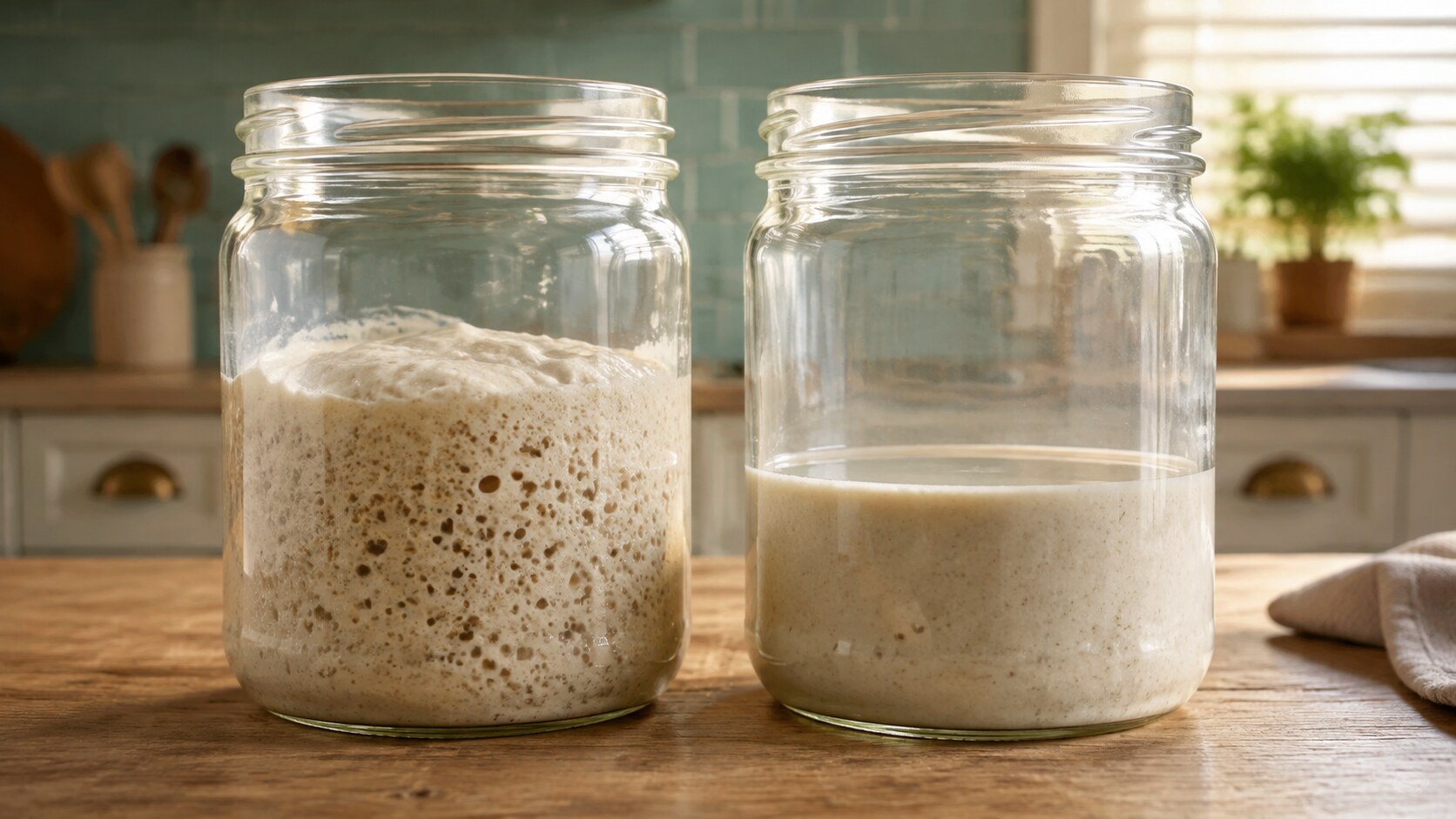
A starter can contain bubbles without being strong enough to raise bread. Readiness means it can produce a substantial, predictable rise after feeding.
The most useful readiness signs
- It roughly doubles—or more—within about 6 to 8 hours at a comfortable room temperature.
- Bubbles appear throughout the culture, not only on top.
- The starter expands upward with enough structure to hold gas.
- Its aroma is clean and pleasantly fermented.
- It repeats this performance over several consecutive feedings.
What ripe starter looks like
Recently fed starter begins low in the jar, expands as fermentation produces gas, reaches a peak, and then falls as food is depleted. Ripe starter is generally used near its maximum height or shortly after it begins to level off.
New starter versus mature starter
An early burst in a brand-new culture can be temporary. Wait until the rise is repeatable. A refrigerated mature starter may also need several room-temperature feedings before it returns to full strength.
Why the float test is optional
Starter may float because it contains trapped gas, but flour, hydration, handling, and timing affect the result. A starter can be ready and fail the test—or float without being dependable. Marked growth in a straight-sided jar is stronger evidence.
If it is not ready
- Feed consistently and measure by weight.
- Check whether the room is unusually cool.
- Make sure each feeding supplies enough fresh flour and water.
- Allow the starter time to peak before feeding again.
- Look for progress across several feedings rather than changing everything at once.
A practical pre-bake check
Before committing flour to a loaf, confirm that the starter has repeated its expected rise, is near peak, smells clean, and has no contamination. If it is sluggish, feed it again and delay the dough.
Continue learning
Ready to bake? Start with my Basic Sourdough Bread recipe, and use my Stretch and Fold guide as you work through the dough.