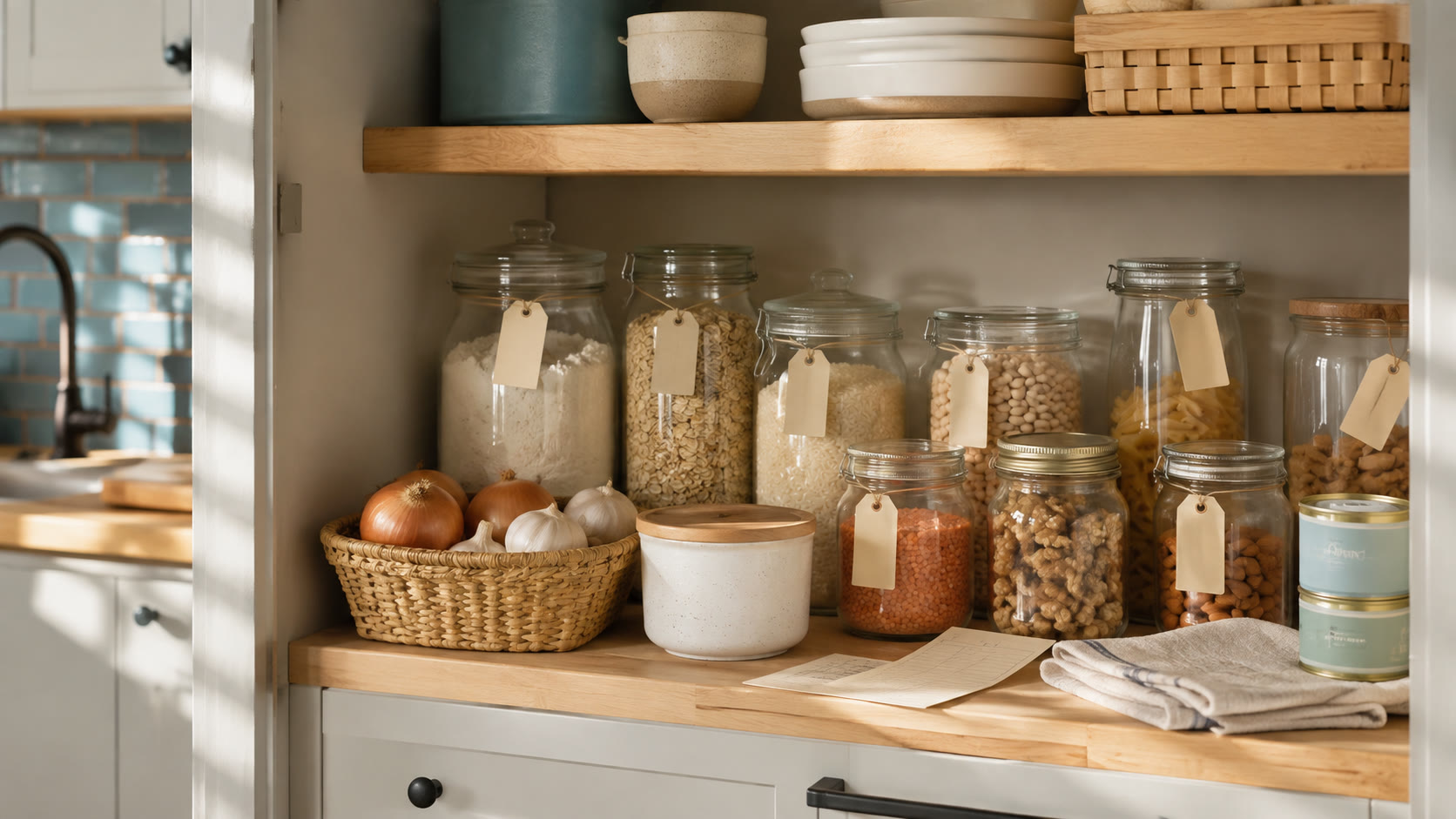
Pantry
Build a pantry that works for you and your family.
I organize useful staples, choose practical containers, create clear labels, and keep a simple inventory so good meals are easier to begin.

Pantry Guides
Start with the beginner’s guide, or choose the task you’re working on today.
- Build a Pantry That Works for You: A Practical Beginner’s Guide
- How to Separate Open Stock From Pantry Backstock
- How to Clean Out Your Pantry Without Wasting Good Food
- How to Organize a Pantry by Task and Frequency
- How to Keep a Simple Pantry Inventory
- How to Choose Pantry Containers That Are Actually Useful
- The Beginner Pantry Checklist: What to Keep and What to Skip
- How Much Food Should You Keep in Your Pantry?
- How to Organize a Small Pantry Without Buying Everything New
- How to Label and Rotate Pantry Food Using FIFO
Organize for the Way You Cook
I group foods by use and frequency: everyday staples within easy reach, baking ingredients together, canned basics in clear rows, and backstock where I can see it before it is forgotten.
What to Keep on Hand
Everyday Staples
Rice, pasta, oats, beans, lentils, canned tomatoes, broth, cooking oils, salt, and the seasonings you use repeatedly.
Baking Basics
Flours, sugars, leaveners, chocolate, nuts, and other ingredients that support the baking you actually do. Keep frequently used supplies together and within easy reach.
Preserved Foods
Group home-canned and store-bought foods by type, rotate the oldest forward, and use the food name plus processing date on home-canned jars. Begin with tested Home Canning guidance.
Plan pantry stock around what you grow and eat. The Gardening hub connects harvest planning with practical pantry and preservation goals.
Containers and Labels
I use containers when they protect food, improve visibility, or make measuring easier. I keep labels simple: ingredient names are enough for dry goods, while home-canned foods benefit from the food name and processing date.
Keep a Simple Inventory
I keep a short list of what is on hand and what needs replenishing because it is more useful than a complicated system I will not maintain. I review it before shopping and whenever I reorganize a shelf.

Pantry Recipes

Chicken — A Jar That Becomes Dinner
A tested USDA method for pressure canning chicken by hot pack or raw pack, with bone-in and boneless processing schedules and meal ideas.
View Recipe
Chicken or Turkey Stock — The Quiet Pantry Essential
A tested pressure-canning method for chicken or turkey stock, including jar sizes, processing times, pressure adjustments, and quick supper ideas.
View Recipe
Chili Con Carne — Ready-to-Heat Supper
A tested USDA chili con carne recipe for pressure canning a ready-to-heat pantry supper, with exact ingredients, processing time, pressure, and safety notes.
View Recipe
Flexible Soup — The Pantry Workhorse
A tested USDA method for pressure canning flexible soup foundations, with safe ingredient limits, processing times, pressure adjustments, and easy finishing ideas.
View Recipe
Ground or Chopped Meat — Weeknight Meal Starter
A tested USDA method for pressure canning ground or chopped meat as a versatile pantry starter for tacos, sauces, hashes, and sandwiches.
View Recipe
Meat Stock — Beef Stock for the Pantry
A tested USDA pressure-canning method for beef stock, with processing schedules, current broth guidance, and practical pantry meal ideas.
View Recipe
Meat Strips, Cubes or Chunks — Stew Starter
A tested USDA method for pressure canning beef, lamb, pork, veal, or venison pieces as a useful pantry starter for quick suppers.
View Recipe