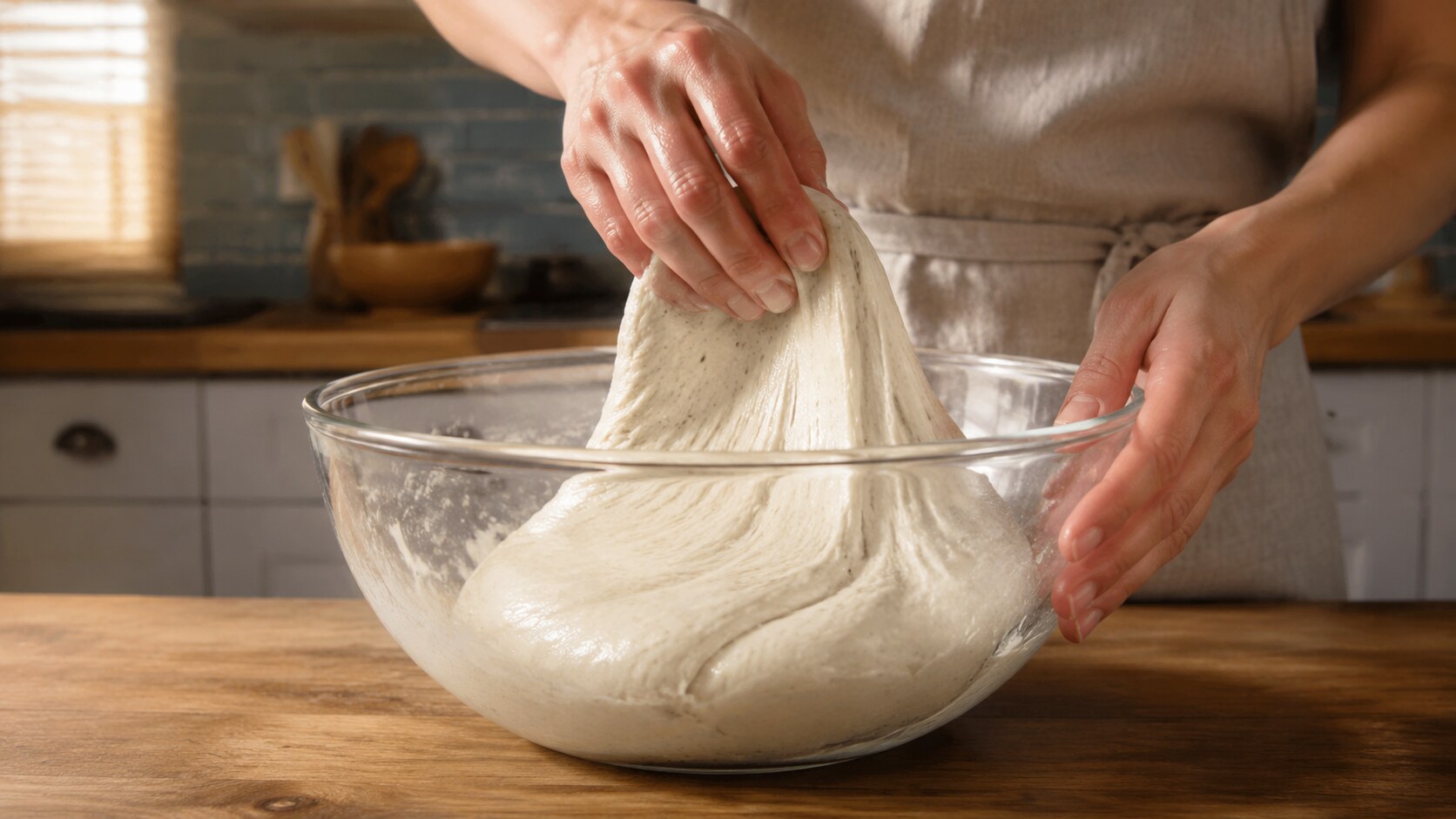
Sourdough technique
Shape a round sourdough loaf with enough surface tension to stand tall while preserving its fermentation.

Shaping turns your fermented dough into a smooth, supported round that can hold its shape as it proofs and bakes. The goal is support—not squeezing out every bubble or pulling the skin until it tears.
Before shaping
- Complete bulk fermentation according to the recipe.
- Prepare a clean, unfloured countertop and a bench scraper. The countertop gives the dough just enough grip to help you create surface tension as you shape.
- Flour or line the proofing basket as directed.
- Handle the dough deliberately and avoid unnecessary pressing.
Preshape and rest
- Turn the dough gently onto the work surface.
- Use the scraper and a cupped hand to gather it into a loose round.
- Let the dough rest seam-side down for about 20 to 30 minutes, or as directed by your recipe.
- Watch the dough: it should relax somewhat without collapsing completely.
Final shaping
- Lightly flour the top and flip the dough so the smooth side rests against the work surface.
- Gently stretch the lower portion and fold it toward the center.
- Fold the left and right sides inward to organize the round.
- Fold the top down toward the center, enclosing the earlier folds.
- Turn the dough seam-side down.
- Cup your hands or use a bench scraper to drag the boule gently against the work surface, tightening the outer skin a little at a time.
Know when to stop
Stop when the top is smooth and taut and the loaf holds a rounded shape. If the skin begins to tear or large bubbles are being forced out, stop tightening.
Transfer to the basket
Move the boule into the prepared proofing basket seam-side up. Cover it and complete the final proof according to the recipe. When turned out for baking, the smooth side will face up for scoring.
Common shaping problems
The boule spreads immediately
If the boule spreads quickly, the dough may not have developed enough strength. Shaping it more aggressively usually won’t fix the underlying problem.
The surface tears
Excessive tightening, insufficient rest, or rough handling can tear the skin. Stop and preserve the structure that remains.
The dough sticks
During the earlier stages of working with the dough, if it sticks to the countertop, lightly mist the surface with water. By the time your dough is ready for final shaping, it should no longer be sticking.
Continue learning
Continue your loaf with my Basic Sourdough Bread recipe, or move on to Sourdough Starter Troubleshooting.