Sourdough starter guide
Use your starter’s rise, aroma, temperature, and feeding history to work through common problems—and recognize when it is safer to start over.

Starter is not rising
Start with the basics: temperature, feeding ratio, flour, water, and timing. A healthy mature starter at a warm room temperature often doubles within 6 to 8 hours, but a cooler starter or one that has recently come out of the refrigerator may take longer. What matters most is that your starter develops a predictable rise after feeding.
- Mark the jar immediately after feeding so you can see how much the starter rises.
- Use unbleached flour and weigh the feed.
- Give the starter enough time to reach its peak.
- Give a refrigerated or neglected starter repeated room-temperature feedings.
- Change only one variable at a time so you can tell what helps.
A new starter rose, then stopped
A dramatic early rise can be temporary. A quiet period of a week or longer can happen while the culture stabilizes. Keep feeding it consistently unless you see signs of contamination.
It smells like acetone or solvent
A sharp acetone-like smell commonly means your starter is hungry. Feed it, then consider shortening the time between feedings or using a larger feed. The aroma should improve as regular feeding restores balance.
There is liquid on top
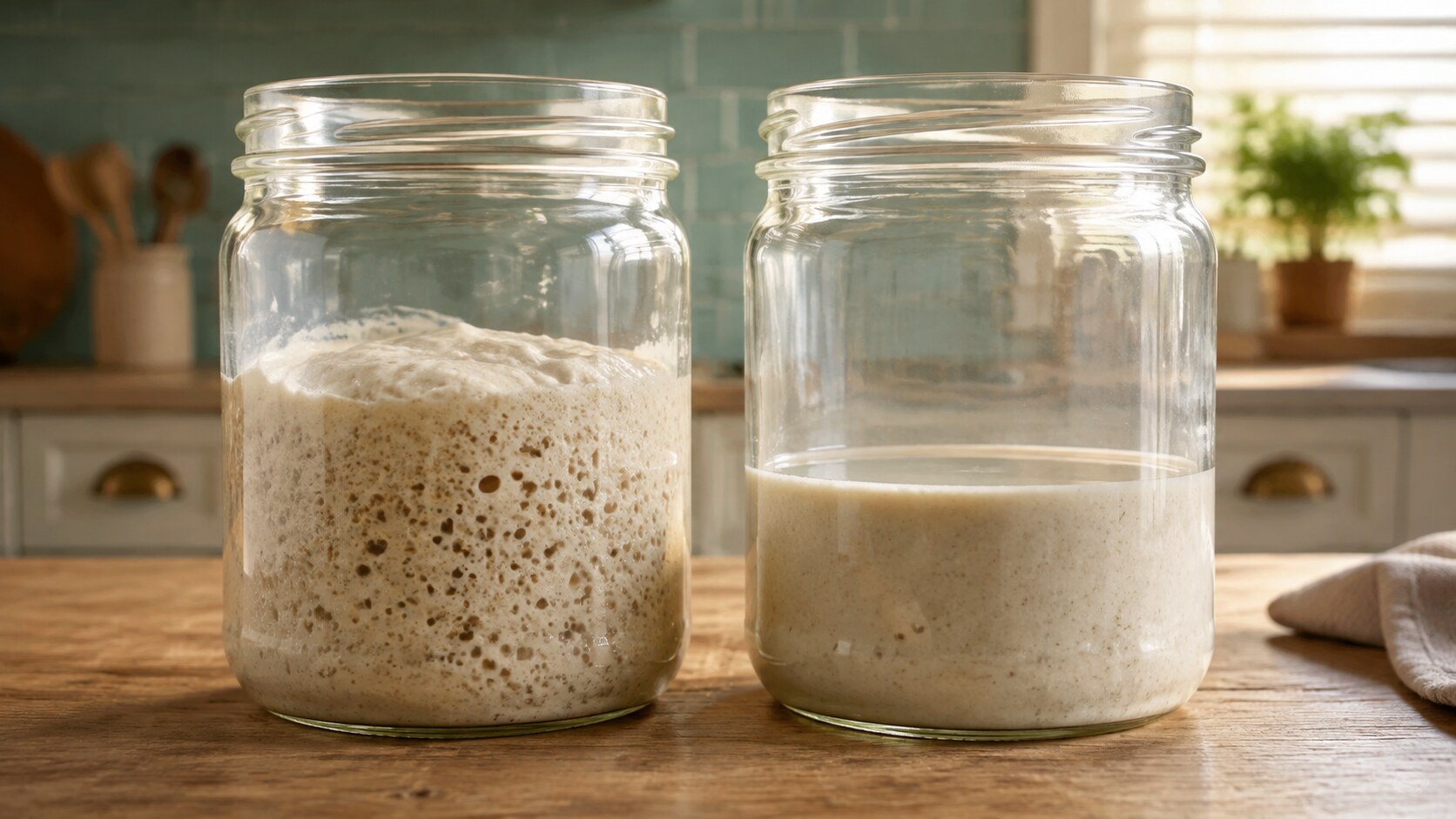
Gray or dark liquid on a neglected starter is commonly called hooch and is usually a sign that the starter is hungry. You can pour it off or stir it in before feeding. Check the starter beneath it for normal color, a clean sour aroma, and renewed activity after feeding.
It peaks too quickly
A warm starter or a small feed may use up its food quickly. Feed sooner, move it to a slightly cooler stable location, or use a larger ratio such as 1:2:2. A larger feed generally takes longer to reach its peak.
It is thin and will not hold a rise
Check your weights and flour choice. Equal flour and water by weight produce a 100%-hydration starter, but different flours absorb water differently. Focus on a repeatable rise after feeding rather than trying to make your starter look exactly like a photograph.
It was forgotten in the refrigerator
If you see no mold, pink or orange color, or putrid odor, keep a small amount and give it repeated room-temperature feedings. Wait to bake with it until it is rising strongly and predictably again.
Discard immediately when
- You see fuzzy mold.
- You see pink or orange streaks or coloration.
- The culture smells rotten or putrid.
- You cannot confidently distinguish a suspicious growth from harmless drying.
Do not taste a starter you suspect is contaminated. Discard it, clean the container thoroughly, and begin again.
Continue learning
Once your starter is healthy and predictable again, learn how to tell when it is ready to bake, or return to the Sourdough & Bread hub.