Sourdough starter guide
Two practical ways to keep a mature sourdough starter healthy and ready to bake—with a simple no-waste refrigerator routine for weekly bakers.

Once your starter begins doubling reliably, you can move to maintenance feeding. The right routine depends mostly on how often you bake.
If you bake almost daily: keep it on the counter
If you bake sourdough almost every day, keep your starter at room temperature and give it a daily 1:1:1 feeding. The ratio is starter, water, and flour by weight.
- Discard about half of the starter.
- Weigh the starter that remains.
- Feed it an equal weight of water and an equal weight of flour.
- Leave it on the counter until it doubles and is ready to bake with.
For example, if you have 25 grams of starter after discarding, feed it 25 grams of water and 25 grams of flour.
If you bake weekly: keep it in the refrigerator
Refrigeration slows fermentation dramatically, which is why a mature starter can usually wait about a week between bakes without daily feeding. This is the routine I use because I usually bake once a week.
I keep about 50 grams of starter in the refrigerator. When I want to make one boule, I add 50 grams of water and 50 grams of flour. Once the starter has doubled and is ready to use, I take 100 grams for my dough and return the remaining 50 grams to the refrigerator.
The no-waste calculation
- 50 g refrigerated starter
- 50 g water
- 50 g flour
- 150 g total starter
I leave it on the counter until it doubles. Then I use 100 grams in my dough and return the remaining 50 grams to the refrigerator. Nothing is wasted.
Adjust for the amount you need
The same method works for more than one loaf. Add enough flour and water to produce the amount your recipe requires while leaving a small amount of starter to maintain. If your starter has been refrigerated for much longer than usual or does not rise predictably, give it one or more regular room-temperature feedings before relying on it to leaven bread.
Know when your starter is ready
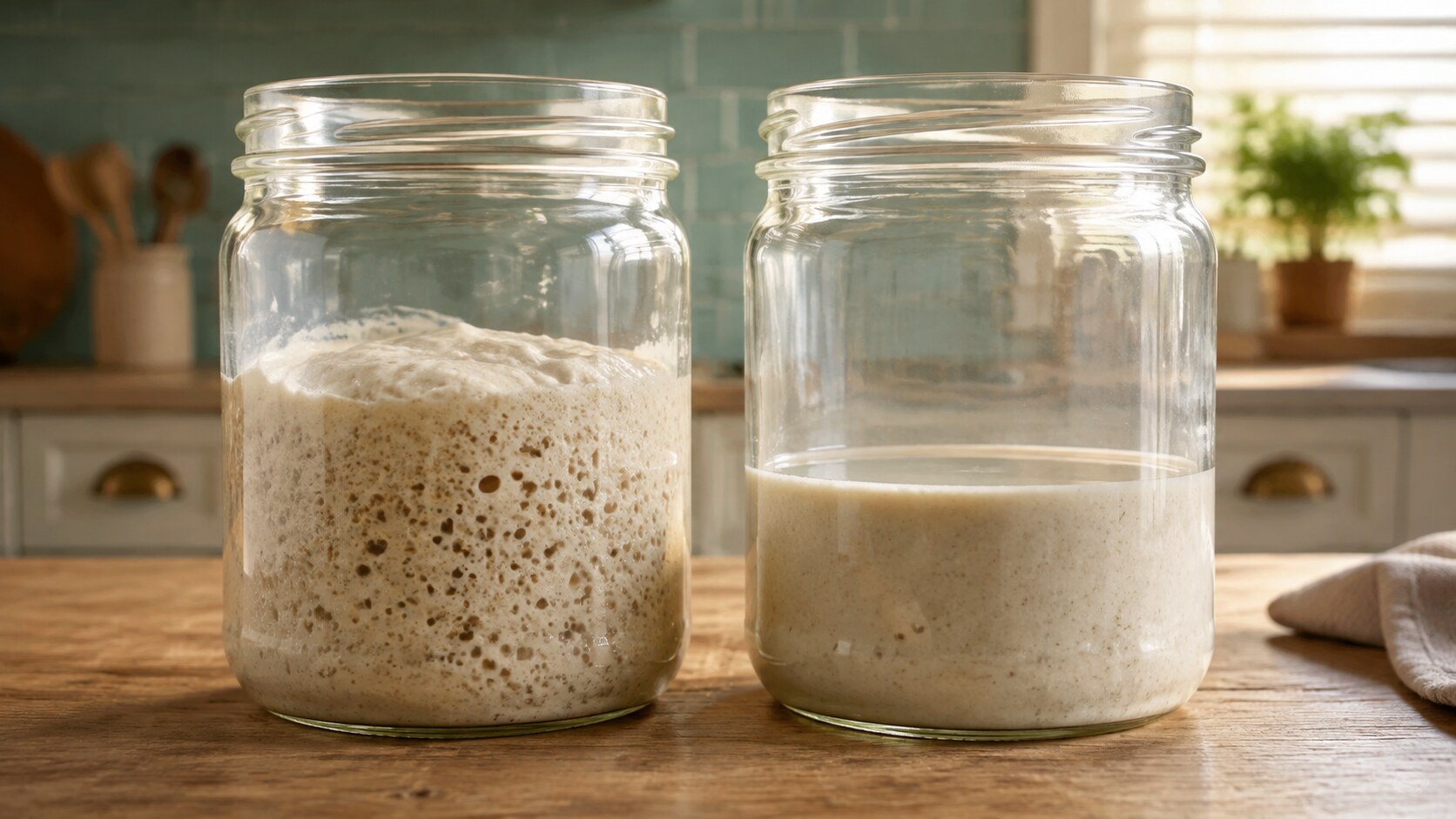
- It has doubled or more in volume.
- The surface is domed or just beginning to level.
- Bubbles are visible throughout the jar.
- It smells pleasantly sour, yeasty, fruity, or yogurt-like.
- Streaks above a sunken starter show that it has already peaked and fallen.
Fuzzy mold, a putrid odor, or pink or orange discoloration means the starter should be discarded.
Continue learning
Next, learn How to Tell When Sourdough Starter Is Ready to Bake, or return to the Sourdough & Bread hub.