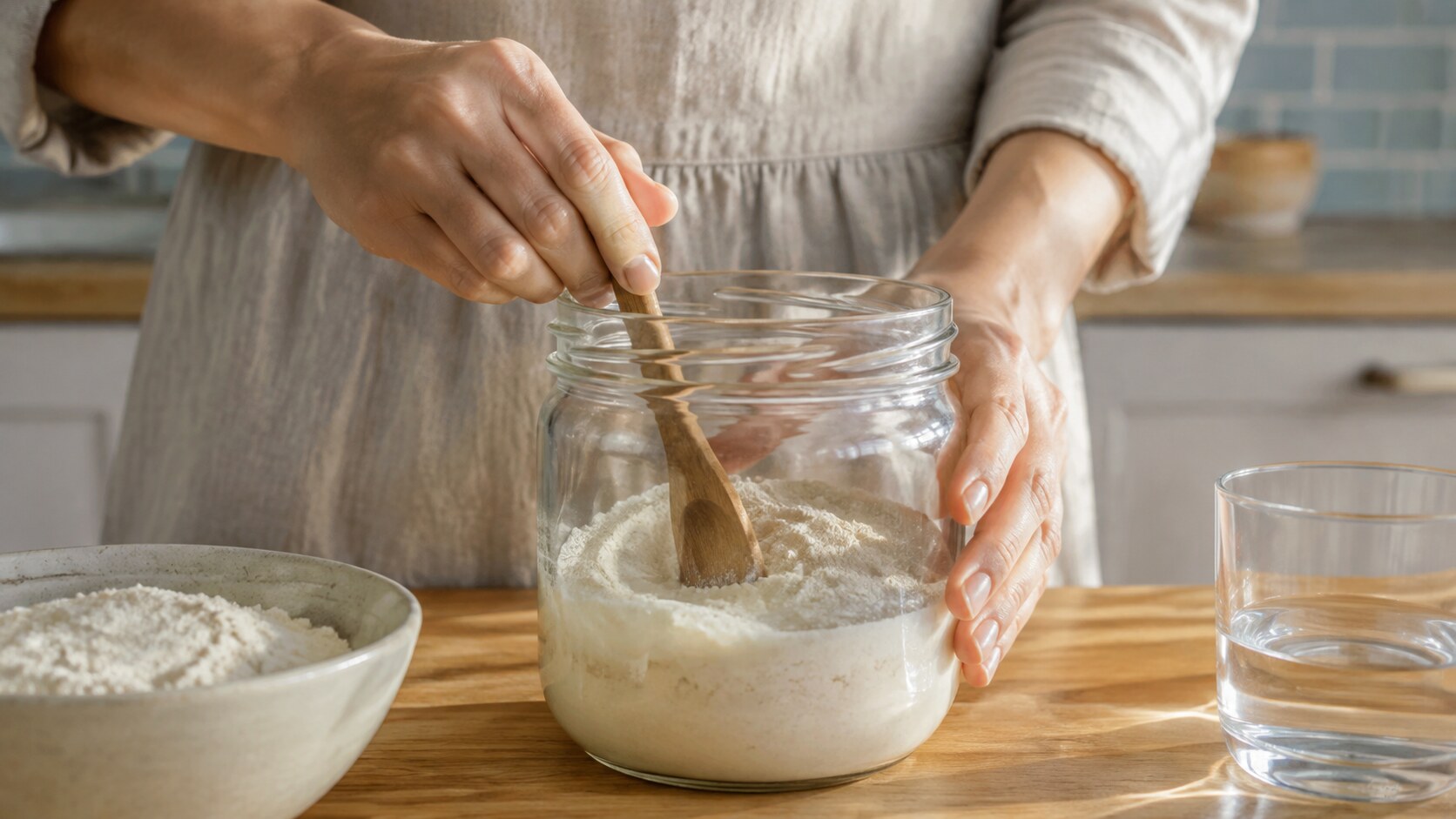
Sourdough starter guide
A dried sourdough starter is an easy backup for your own culture, a thoughtful gift for another baker, and a culture you can bring back to life when you are ready to bake again.

A healthy starter can be dehydrated and stored without regular feeding. If your active starter is ever lost, contaminated, or accidentally discarded, the dried culture gives you a way to bring it back. This guide covers both sides of the process: putting a healthy starter into dry storage and activating dried starter when you want to use it.
Part 1: How to Dehydrate Your Starter
What you need
- Healthy, active sourdough starter
- Parchment paper
- A rimmed baking sheet or tray
- An offset spatula, bowl scraper, or the back of a spoon
- A clean, dry airtight glass jar
- A label and date
1. Start with a healthy culture
Use a mature starter that is active and free of mold or unusual pink or orange discoloration. A recently fed, bubbly starter makes a dependable backup.
2. Spread it very thinly
Place parchment paper on a baking sheet or tray. Spread the starter over the parchment in the thinnest, most even layer you can manage. A very thin layer dries faster and more evenly.
3. Let it dry completely
Leave the tray uncovered at room temperature. In a dry home, the starter may be ready the next day. In humid conditions, it may take several days. Do not package it according to the clock—wait until every part is completely dry, brittle, and easy to snap.
Avoid high heat. Gentle room-temperature drying protects the culture. If your home is very humid, airflow from a fan can help. Avoid turning on the oven and risking overheating the starter.
4. Crush the dried starter
Peel the brittle starter from the parchment and break it into small flakes with clean hands. The starter does not need to be ground into a fine powder.
5. Store it airtight
Transfer the dried starter to a clean, completely dry airtight jar. Label it with the starter name and drying date, then keep it in a cool, dark, dry place.
Part 2: How to Activate Dehydrated Starter
If you purchased a dehydrated starter, follow the instructions that came with that culture first. The provider knows the feeding schedule and quantities intended for its starter. The steps below explain the general process and what to watch for as the culture wakes up.
What you need
- Dehydrated sourdough starter
- A clean, clear jar with room for expansion
- A digital kitchen scale
- Unbleached flour, or the flour specified by the culture maker
- Room-temperature drinking water
- A spoon or small spatula
- A loose-fitting cover
- A rubber band or washable marker to track growth
1. Rehydrate the culture
Combine the dried starter with the specified amount of water. Break up the dry pieces gently and allow the culture the recommended time to soften before adding flour.
2. Begin the prescribed feedings
Add flour and water in the quantities recommended for the culture. Mix thoroughly, scrape down the jar, cover loosely, and mark the level so you can see how much it rises.
3. Watch for progressive activity
The first signs may be small bubbles, a changing aroma, and modest expansion. Each successful feeding should lead toward stronger, faster, and more repeatable growth. A few bubbles alone do not mean the starter is ready to raise bread.
4. Transition to regular maintenance
Once the culture is fully active, move to your regular starter-maintenance routine.
How to Know It Is Ready to Bake
Judge the starter by repeatable performance rather than its age. Look for a starter that becomes abundantly bubbly after feeding, roughly doubles within 6 to 8 hours at room temperature, repeats that rise for several consecutive feedings, and smells clean and pleasantly fermented.
For a more detailed readiness check, see How to Tell When Sourdough Starter Is Ready to Bake.
If Activation Seems Slow
- Keep the starter in a comfortable room-temperature range and away from direct heat.
- Weigh feedings accurately.
- Use unbleached flour and drinking-quality water.
- Give the starter enough time between feedings to show activity.
- Avoid harsh direct sunlight.
When to Discard It
Discard the culture if you see fuzzy mold, pink or orange coloration or streaks, or if it smells putrid. When contamination is uncertain, do not taste it.
Continue learning
Next, read Starter Maintenance, learn How to Tell When Sourdough Starter Is Ready to Bake, or return to the Sourdough & Bread Hub.